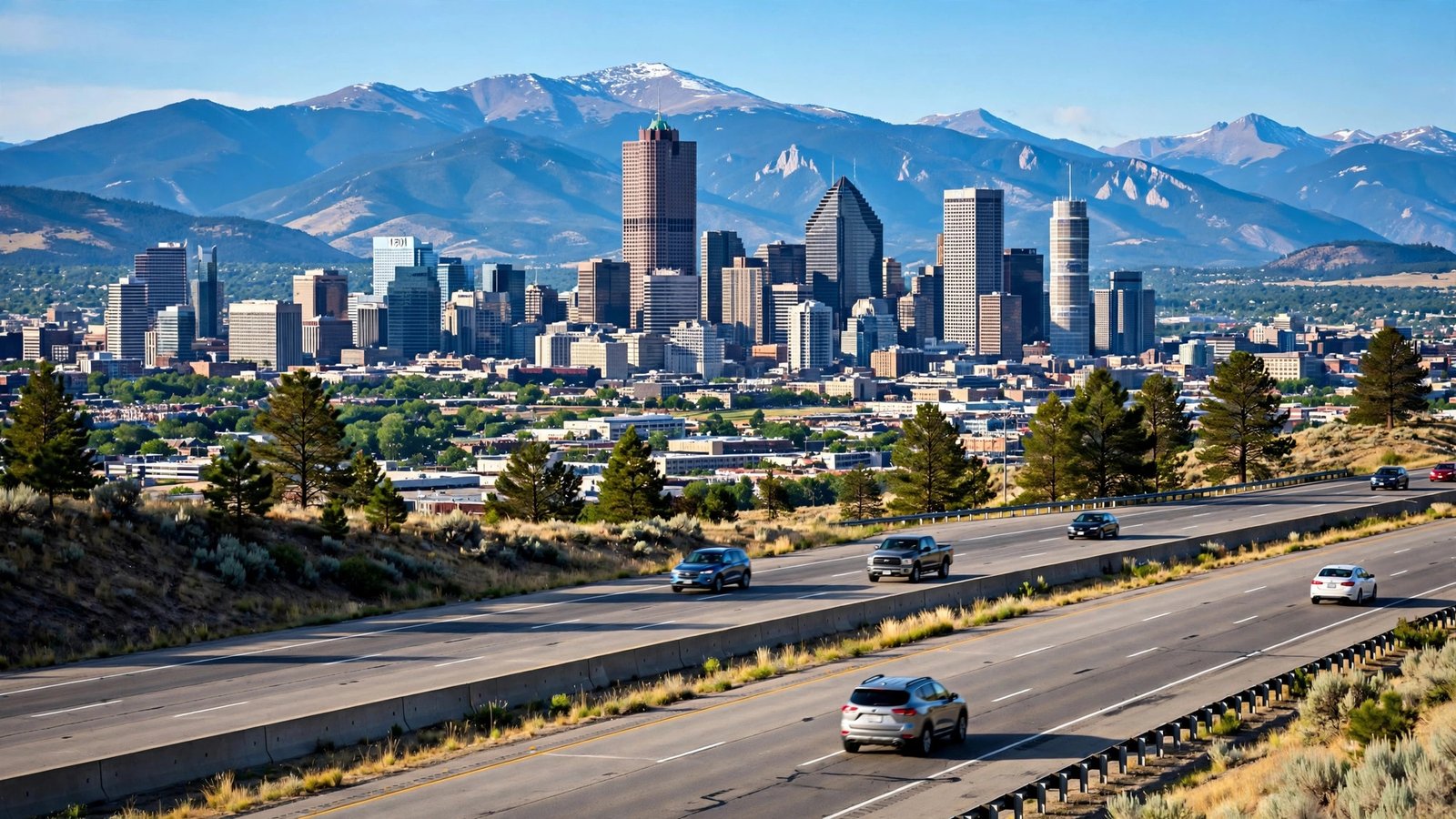
Denver Auto Insurance Quotes: What Drivers Pay in 2026
Shopping for auto insurance quotes in Denver, Colorado can feel like a gamble — one company quotes you $140 a month, another wants $240 for the same coverage. That’s not a glitch. Denver drivers pay some of the highest premiums in the Mountain West, and the reasons are baked into where you live: golf-ball-sized hail, treacherous winter commutes on I-70, and a metro population that keeps climbing.
I dug into what Colorado drivers are actually paying in 2026, what the state requires you to carry, and the local factors that move your quote up or down. Here’s everything you need to compare Denver auto insurance quotes like you know what you’re doing — because after this, you will.
How Much Does Car Insurance Cost in Denver?
For 2026, full-coverage auto insurance in Denver averages roughly $2,000 to $2,600 per year (about $165–$215 per month) for a typical driver with a clean record. That puts Colorado noticeably above the national average, which sits closer to $1,800–$2,000 a year.
Minimum-coverage policies — just the liability limits Colorado requires and nothing more — run closer to $550 to $850 per year in the Denver metro. Cheap, yes, but it’s bare-bones protection that leaves your own car completely uncovered.
These are ranges, not promises. Your actual quote depends on your ZIP code (Cherry Creek isn’t priced like Aurora), your driving record, your vehicle, and your age. Still, they’re a useful sanity check: if someone quotes you $400 a month for basic coverage with a clean record, keep shopping.
Average Costs by Coverage Level in Colorado
| Coverage Level | Typical Annual Cost (CO) | What You Get |
|---|---|---|
| State minimum (25/50/15) | $550–$850 | Liability only — covers injuries/damage you cause others |
| Standard (50/100/50) | $900–$1,300 | Higher liability limits for better protection |
| Full coverage (100/300/100 + comp/collision) | $2,000–$2,600 | Liability plus your own car’s repairs and theft |
| Full coverage, high deductibles ($1,000) | $1,700–$2,200 | Same protection, lower premium, more out-of-pocket per claim |
Denver quotes tend to land on the higher end of each band. Colorado Springs, Fort Collins, and Pueblo usually price a bit lower — same state, but less hail exposure and less traffic density.
Colorado Minimum Auto Insurance Requirements
Colorado law requires every driver to carry at least:
- $25,000 bodily injury liability per person
- $50,000 bodily injury liability per accident
- $15,000 property damage liability per accident
That’s the famous 25/50/15 — and honestly, it’s not much. One serious crash can blow past $25,000 in medical bills fast. Colorado also requires insurers to offer you uninsured/underinsured motorist (UM/UIM) coverage and medical payments (MedPay) coverage, though you can decline them in writing.
Here’s my honest take: the state minimum keeps you legal, but it doesn’t keep you safe. In a metro area where the average new car costs over $45,000, a $15,000 property damage limit is one rear-ended SUV away from a personal lawsuit. Most Denver agents steer people toward at least 50/100/50 — and full coverage if the car is worth protecting.
Colorado Is an At-Fault State
Worth knowing: Colorado uses a traditional at-fault (tort) system. After a crash, the driver who caused it — or more precisely, their insurer — pays for the damage. That means liability coverage isn’t optional fluff here; it’s the financial shield between you and a five-figure claim. It also means uninsured motorist coverage pulls real weight in Colorado, because roughly one in six Colorado drivers is estimated to be driving without insurance. If one of them hits you, your UM coverage is what pays your medical bills.
Why Denver Quotes Run Higher: Hail, Winter, and Traffic
Denver’s premiums aren’t inflated by accident. Insurers price what they pay out, and Colorado hands them expensive local realities.
Hail Season Is the Big One
The Denver metro sits in what’s nicknamed “Hail Alley” — the Front Range stretch that produces some of the most destructive hail in North America. Between roughly April and September, storms roll off the mountains and pummel cars across the metro. The Denver area has seen individual hailstorms cause over a billion dollars in insured damage.
For your quote, this matters in one place: comprehensive coverage. Hail damage falls under comprehensive, not collision. If you carry liability-only, a May hailstorm can destroy your hood and your insurer owes you nothing. Denver drivers file comprehensive claims far above the national average, and insurers price that in.
Winter Driving and I-70
Then there’s winter — real snow and freeze-thaw cycles that ice over the highways. Add ski traffic crawling up I-70 on Friday afternoons, and winter collision claims spike every year from November through March. Denver-area ZIP codes carry that in their collision premiums whether you ski or not.
A Growing, Congested Metro
Denver’s population growth has been relentless. More cars on I-25, I-70, and the 6th Avenue corridor means more fender-benders and rear-end collisions in stop-and-go traffic — and more claims per capita.
One Piece of Good News: Colorado Banned Credit-Based Pricing
Colorado became one of the first states to ban insurers from using credit-based insurance scores when setting auto rates. In most states, a thin credit file quietly inflates your premium; in Colorado, it legally can’t. If your credit isn’t great, Colorado quotes are likely more forgiving than what friends in Texas or Florida pay. (Your driving record, mileage, and claims history still matter plenty.)
How to Compare Auto Insurance Quotes Online in Denver
Comparing quotes is where most people either save real money or leave it on the table:
- Compare identical coverage. A $120 minimum-liability quote and a $150 full-coverage quote aren’t comparable. Lock in your coverage levels first, then get every quote on that exact package.
- Get at least four or five quotes. Pricing for the same Denver driver can swing 30–50% between insurers. On a $2,000 annual premium, that’s a $600+ spread — not a rounding error.
- Have your facts ready. You’ll need each driver’s license info and history, your VIN, annual mileage, and commute distance (a 40-mile round trip to the Tech Center prices differently than working from home).
- Quote before you buy the car. Insurance on a safe, common sedan or SUV can be hundreds less per year than on a sports car or a vehicle with expensive repair costs. Check before you sign at the dealership.
- Check the insurer’s local reputation. The cheapest quote from a company with a terrible claims record is a bad deal. Look at Colorado Division of Insurance complaint ratios and third-party claims satisfaction scores.
- Re-shop every 12 months. Loyalty discounts rarely beat a fresh market quote. Denver rates move year to year with hail losses and repair costs — last year’s cheapest company often isn’t this year’s.
Comprehensive Coverage: Why It Matters More in Denver
In many states, dropping comprehensive on an older car is a reasonable way to save. In Denver, think twice.
Comprehensive covers everything that isn’t a collision: hail, theft, vandalism, falling branches, a deer on Highway 285 at dusk. In the Denver metro, hail alone makes comprehensive claims far more likely than average. If your car is worth more than about $5,000–$7,000 and you park it outside, comprehensive usually pays for itself the first time a spring storm rolls through.
Check your deductible, too. A $1,000 comprehensive deductible on a car with $3,500 in hail damage still leaves you $2,500 out of pocket. Many Denver drivers carry a lower comprehensive deductible ($250–$500) than their collision deductible specifically because of hail — a smart, cheap adjustment.
Discounts That Actually Move the Needle in Colorado
- Telematics / usage-based programs. Let the insurer track your driving for a few months via an app or plug-in device. Safe drivers routinely save 10–30% — smooth braking and off-peak driving score well in Denver traffic.
- Bundling home and auto. Usually the single biggest discount — often 10–20% off both policies.
- Defensive driving courses. Colorado recognizes approved courses, and many insurers discount 5–10% for completing one. It’s a few hours online.
- Good student discount. Full-time students under 25 with a B average or better can save 10–15% — relevant for teen drivers at CU Denver or Metro State.
- Pay in full and go paperless. Skipping monthly installment fees ($5–$10/month) plus paperless billing adds up.
- Low mileage. Driving under 7,500–10,000 miles a year (working from home, taking RTD light rail) earns a real, underused discount.
- Garaged vehicle. In a hail-prone city, a car that sleeps in a garage is genuinely cheaper to insure — make sure your quote reflects it.
Denver Auto Insurance Quotes: Sample Monthly Ranges by Driver Profile
Illustrative monthly ranges for full coverage in the Denver metro in 2026 — use them to benchmark, since your exact quote will differ by record, ZIP, and vehicle.
| Driver Profile | Estimated Monthly Full Coverage |
|---|---|
| 35-year-old, clean record, midsize sedan | $160–$210 |
| 25-year-old, clean record, compact SUV | $200–$270 |
| 19-year-old on parents’ policy, good student | $180–$260 (their share) |
| 45-year-old, one speeding ticket, pickup truck | $190–$250 |
| 30-year-old, one at-fault accident, sedan | $230–$320 |
Teen drivers on their own policy are the painful outlier — it’s common to see $350+/month for a 17-year-old solo policy in Denver. Keeping teens on a family policy with a good student discount is almost always cheaper.
Frequently Asked Questions
How much is car insurance per month in Denver?
For 2026, expect roughly $165–$215 per month for full coverage with a clean driving record, and $45–$70 per month for state-minimum liability. Young drivers, drivers with accidents or tickets, and high-value vehicles will pay more. The fastest way to know your number is to pull three to five quotes with identical coverage levels.
What is the minimum car insurance required in Colorado?
Colorado requires 25/50/15 liability coverage: $25,000 per person and $50,000 per accident for bodily injury, plus $15,000 for property damage. Insurers must also offer uninsured motorist and medical payments coverage. The minimum keeps you legal, but most Denver drivers are better protected with higher limits.
Why is car insurance so expensive in Denver?
Three main reasons: severe hailstorms that drive up comprehensive claims, winter weather and congested highways that increase collision claims, and a fast-growing metro with more cars on the road. Colorado’s ban on credit-based pricing helps some drivers, but weather and traffic losses dominate the math.
Do I need comprehensive coverage in Denver?
If your car is worth more than a few thousand dollars or you park outside, yes. Hail season (roughly April–September) regularly causes thousands in damage per vehicle, and only comprehensive covers it. Consider a lower comprehensive deductible than your collision deductible.
How can I lower my car insurance quote in Denver?
Shop four to five insurers with identical coverage, raise deductibles you can afford, bundle home and auto, enroll in a telematics program, take a defensive driving course, and ask about low-mileage and garaging discounts. Re-shopping annually is the highest-leverage habit.
Internal Link Suggestions
- Link the phrase “compare identical coverage” to compare-car-insurance-quotes (side-by-side quote comparison guide).
- Link the discounts section to car-insurance-discounts (full discount breakdown).
- Link the Texas cost mention in the credit-pricing paragraph to texas-auto-insurance-quotes (state cost comparison).